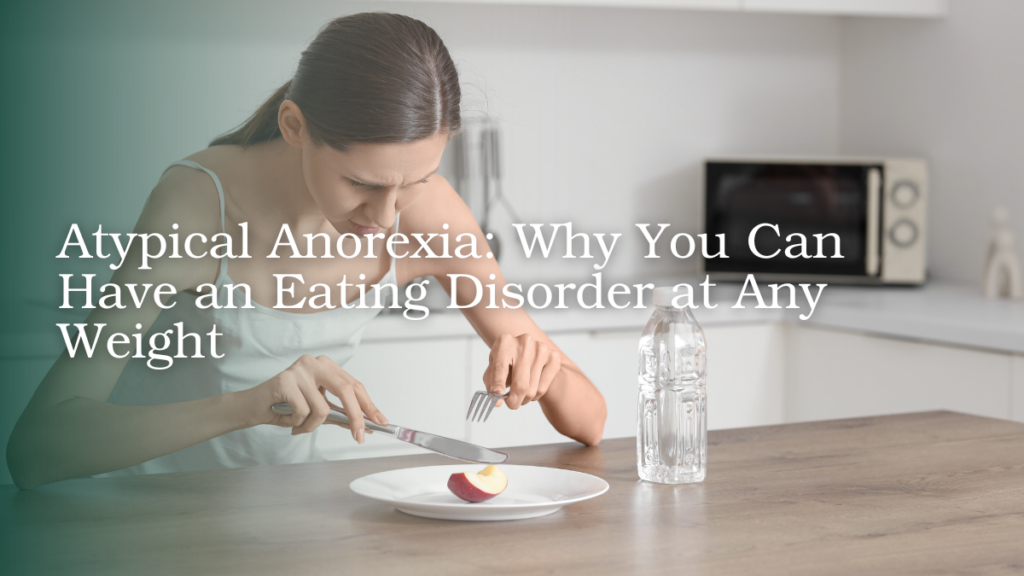
Being ambitious is not a bad thing. Wanting good grades, doing well at work, or setting high standards can be healthy and motivating. The problem starts when achievement becomes tied to self-worth and mistakes feel unacceptable. For some people, that pressure can spill into eating, exercise, and body image. A person may feel they need to follow their diet perfectly, never miss a workout, or maintain a certain body shape to feel successful.
Research has found a consistent relationship between perfectionism and eating-disorder symptoms, particularly when people are highly self-critical about falling short of their own standards. Let’s look at how perfectionism can contribute to disordered eating, why high achievers can be vulnerable, what warning signs to notice, and how support can help.
How Perfectionism Can Influence Eating Behaviors
Perfectionism can affect eating and exercise when the need to do things perfectly turns flexible habits into strict rules. Over time, this pressure can change how someone thinks about food, exercise, and their own progress.
High standards can slowly become rigid food rules
Perfectionism is not simply wanting to do well. It can become a problem when someone feels that anything less than perfect means they have failed.
That mindset can easily move into eating and exercise.
For example:
“I have to follow my meal plan perfectly.”
“I can’t eat anything unhealthy.”
“Missing one workout means I’ve ruined my progress.”
“If I gain weight, I’m doing something wrong.”
These thoughts can turn flexible habits into strict rules.
Research suggests that perfectionism is an important risk factor for eating disorders, although it is only one part of a much larger picture involving biological, psychological, and social factors.
Once food becomes another area where someone feels they must achieve perfection, the pressure can start affecting everyday life.
Success can become tied to controlling food
High achievers often feel comfortable working toward clear goals.
They study for the exam. They finish the project. They follow the training plan.
Food can start to feel like another goal that can be measured and controlled.
This might involve:
- Counting every calorie
- Tracking food or exercise constantly
- Following increasingly strict meal plans
- Avoiding foods considered “bad”
- Feeling guilty after eating something outside the plan
- Exercising to compensate for eating
- Becoming distressed when routines change
The issue is not tracking food or exercising by itself. It is when these behaviors become necessary for someone to feel successful or in control.
That need for control can become especially difficult when real life does not go according to plan.
Small mistakes can feel much bigger
Perfectionism often leaves very little room for mistakes. A person might eat one dessert and think, “I’ve ruined the whole day.” Or they might miss one workout and immediately feel they have lost all their progress.
This can create an all-or-nothing pattern:
| Flexible thinking | Perfectionistic thinking |
| “I ate more than planned today.” | “I completely failed.” |
| “I can get back to my routine tomorrow.” | “I have to compensate for this.” |
| “One missed workout is okay.” | “I can’t let myself miss another.” |
| “Food doesn’t have to be perfect.” | “I need to eat perfectly.” |
Over time, this way of thinking can make eating and exercise feel increasingly stressful.
Understanding this pattern helps explain why perfectionism can do more than create high standards. It can keep unhealthy behaviors going.
Why High Achievers Are Especially Vulnerable
High achievement can sometimes make unhealthy patterns harder to notice, especially when strict habits are praised as discipline or commitment. What looks like success on the outside may be accompanied by significant anxiety or self-criticism.
Achievement can hide signs that something is wrong
A high-achieving person may still perform well at school, work, sports, or other activities while struggling privately.
They might receive praise for being disciplined and organized.
People may see:
- Excellent grades
- Strong athletic performance
- A carefully planned diet
- Regular gym attendance
- A highly organized routine
What they might not see is the anxiety behind those behaviors.
Someone could be thinking constantly about food, exercising despite exhaustion, or feeling intense guilt after eating while still appearing successful.
This can make the problem harder to recognize, especially when the behavior looks like commitment from the outside.
Self-worth can become tied to achievement
Perfectionism becomes more concerning when achievement starts determining how someone feels about themselves.
Instead of thinking:
“I’m proud that I worked hard.”
The person may start thinking:
“I’m only good enough when I succeed.”
That difference matters.
If eating, weight, or exercise becomes another measure of success, a person’s self-worth can become closely tied to meeting food or body-related goals.
Clinical perfectionism has been described as a pattern where self-evaluation depends heavily on meeting demanding personal standards. It is considered a risk and maintaining factor across eating disorders.
When self-worth depends on getting everything right, even small changes can feel threatening.
Fear of failure can reinforce restrictive habits
For some people, strict eating feels safer than uncertainty.
There is a clear rule:
“If I follow this plan exactly, I’ll be okay.”
That can make flexibility uncomfortable.
A restaurant meal becomes stressful because the ingredients are unknown. A holiday becomes difficult because the usual routine changes. A missed workout feels unacceptable.
The person may respond by becoming even stricter.
This creates a cycle:
High expectations → fear of falling short → stricter rules → temporary sense of control → greater anxiety when rules are broken
Perfectionism may therefore help maintain unhealthy patterns even after they have started causing problems.
The cycle becomes easier to understand when we look at the specific ways it can show up in everyday life.
Warning Signs Perfectionism Is Affecting Eating
Perfectionism does not always affect eating in the same way. In some people, it may show up through increasingly rigid food rules, body-image concerns, or difficulty allowing flexibility around exercise.
Food rules become increasingly difficult to break
Having preferences around food is normal. The concern is when those preferences turn into rules that cause distress.
Watch for patterns such as:
- Feeling unable to eat food that is not “perfect”
- Becoming upset when meals change unexpectedly
- Avoiding entire food groups without a medical reason
- Spending excessive time planning meals
- Feeling guilty after eating certain foods
- Needing to compensate after eating more than planned
A person might still describe these behaviors as “healthy eating,” even when they are becoming increasingly restrictive.
Food rules are only one part of the picture. The way someone responds to their body can reveal another side of perfectionism.
Body image becomes another performance goal
For some high achievers, the body can become another project to perfect.
The goal may be to become thinner, more muscular, more toned, or simply “better.”
This can lead to:
- Frequent mirror checking
- Comparing their body with others
- Constantly measuring progress
- Feeling distressed about small physical changes
- Taking repeated photos to monitor appearance
- Changing eating or exercise after noticing a perceived flaw
A desire to improve fitness is not automatically unhealthy.
The concern is whether the person can accept normal changes without feeling that they have failed.
When appearance becomes another measure of success, exercise can also become harder to keep in balance.
Exercise becomes something they cannot skip
Exercise can be a healthy part of life. But perfectionism can turn it into another area where mistakes feel unacceptable.
Someone might exercise despite:
- Injury
- Illness
- Extreme fatigue
- Not eating enough
- A clear need for rest
They may also feel intense guilt when they miss a workout.
The question is not simply, “How much does this person exercise?”
A more useful question is, “What happens emotionally when they cannot exercise?”
These patterns can be difficult to spot because they may initially look like motivation, discipline, or commitment.
How Perfectionism Can Be Addressed In Treatment
Because perfectionism can influence the thoughts and emotions behind eating and exercise behaviors, treatment may need to address more than food alone. Understanding these deeper patterns can help create more sustainable changes.
Treatment looks beyond food and weight
Simply telling someone to “eat normally” does not address the thinking that keeps the problem going.
Treatment can also explore:
- Fear of failure
- Harsh self-criticism
- All-or-nothing thinking
- Need for control
- Anxiety around mistakes
- Self-worth tied to achievement
- Difficulty coping with uncertainty
Research suggests that interventions targeting perfectionism can improve perfectionism itself and may also help reduce eating-disorder and body-image concerns.
Addressing these deeper patterns can make it easier to create lasting changes around food and exercise.
Learning flexibility can reduce the pressure
Recovery does not mean giving up ambition.
It means learning that a mistake does not erase everything else.
For example:
Instead of “I need to follow my plan perfectly,” the goal becomes “I can make choices that support my health without following rigid rules.”
Instead of “I missed my workout, so I failed,” it becomes “Rest is also part of taking care of my body.”
These changes can take time, particularly when perfectionism has been part of someone’s personality or coping style for years.
With the right support, high standards can remain a strength without becoming a source of constant pressure.
How Weiss Wellness Can Support You
At Weiss Wellness, therapy for eating concerns looks beyond the behavior itself. The practice works with clients experiencing eating disorders and negative body image and can coordinate with dietitians and physicians when needed.
Support can focus on:
- Understanding the pattern: Exploring how perfectionism, anxiety, self-worth, and food behaviors connect.
- Challenging unhelpful thinking: CBT can help identify rigid or all-or-nothing thoughts and develop more balanced ways of thinking.
- Building emotional skills: DBT and mindfulness can provide practical tools for handling distress without turning to restrictive eating or other harmful behaviors.
- Improving flexibility: Therapy can help someone become more comfortable with uncertainty, mistakes, and situations that do not go according to plan.
- Supporting the family: Family psychotherapy can help loved ones understand what is happening and respond without adding pressure or shame.
The goal is not to take away someone’s ambition. It is to help them pursue their goals without feeling that they have to be perfect to feel worthy.
Final Thoughts
Perfectionism can be a strength when it encourages effort and care. It becomes concerning when mistakes feel unacceptable and self-worth depends on getting everything right. For some high achievers, that pressure can extend to food, exercise, and appearance. Strict rules, guilt after eating, compulsive exercise, and constant body checking can gradually become difficult to control.
Recognizing these patterns early can help prevent them from becoming more deeply established. Treatment can address not only eating behaviors but also the self-criticism, anxiety, and fear of failure underneath them. If perfectionism is affecting your relationship with food or your body, Weiss Wellness offers personalized support to help you build greater flexibility and balance.
Frequently Asked Questions
Perfectionism is considered a risk factor for eating disorders, but it does not cause them by itself. Eating disorders develop through a combination of biological, psychological, and social factors.
No. Being ambitious, hardworking, or successful does not mean someone will develop an eating disorder. The concern is greater when achievement becomes closely tied to self-worth and mistakes create intense self-criticism or distress.
Perfectionism can make someone feel that eating has to be done “correctly.” This may lead to rigid food rules, guilt after eating, constant tracking, or distress when meals do not go according to plan.
Perfectionism can be associated with binge eating, particularly when strict rules are difficult to maintain. Breaking those rules can trigger feelings of failure, which may contribute to a cycle of restriction, overeating, and renewed attempts at control.
It often involves all-or-nothing thoughts such as “I ruined everything,” “I have to do this perfectly,” or “If I cannot follow the plan, there is no point.” These thoughts can increase anxiety around food and exercise.
Yes. A person may believe they are simply being healthy, disciplined, or committed to fitness. Rigid rules, distress, secrecy, and increasing interference with everyday life can reveal that the behavior has become more concerning.
Yes. Treatment can address both eating behaviors and the perfectionistic thinking that may be maintaining them. CBT-based approaches and other therapeutic strategies may help people develop greater flexibility and reduce harsh self-evaluation
Consider support when food, exercise, or body image creates significant anxiety, guilt, or distress, or begins affecting relationships, work, school, health, or daily routines. Early support can help address these patterns before they become more entrenched.