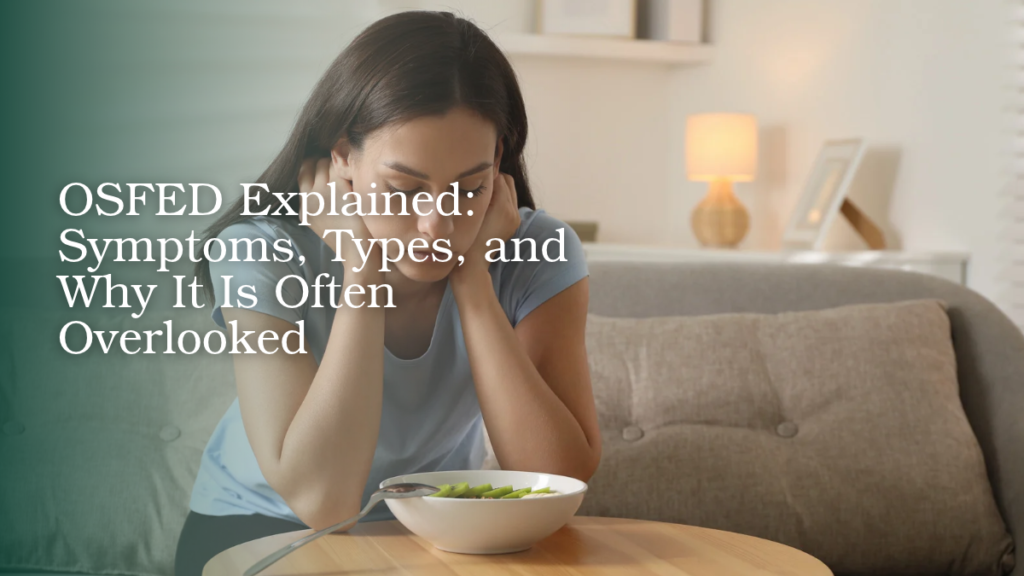
Do you find yourself eating the same few meals every day because unfamiliar foods make you uncomfortable? Perhaps certain textures, smells, or even the thought of choking or feeling sick make eating stressful. These experiences may be more than ordinary picky eating.
Adults can have Avoidant/Restrictive Food Intake Disorder (ARFID), an eating disorder that can affect nutrition, health, and daily life. In this blog, we’ll explore the signs and symptoms of ARFID in adults, why it happens, how it differs from picky eating, and the treatment options that can help.
What ARFID Means And How It Affects Adults
Avoidant/Restrictive Food Intake Disorder (ARFID) is an eating disorder that involves avoiding certain foods or eating too little to meet the body’s nutritional needs.
Unlike anorexia nervosa, ARFID is not driven by a desire to lose weight or concerns about body shape. Instead, food restriction may be linked to sensory sensitivities, fear of unpleasant experiences, or a lack of interest in eating.
ARFID can affect adults in different ways. Some people have eaten a limited range of foods since childhood. Others develop restrictive eating patterns after a distressing experience, such as choking or severe vomiting.
Why ARFID Can Continue Or Develop During Adulthood
ARFID often begins in childhood, but it does not always disappear with age. Adults may continue to experience food avoidance that started years earlier.
In some cases, restrictive eating becomes more noticeable or begins in adulthood. For example, a person may start avoiding more foods after a frightening choking incident or a period of illness.
Several factors may contribute to ARFID in adults:
- Long-standing food selectivity: A person may have relied on a small number of familiar foods since childhood.
- Sensory sensitivities: Certain textures, smells, tastes, or appearances may make eating uncomfortable.
- Fear of unpleasant consequences: Someone may avoid food because they fear choking, vomiting, nausea, or stomach pain.
- Low appetite or limited interest: Some adults rarely feel hungry or find eating uninteresting.
These experiences can overlap. A person may have more than one reason for avoiding food.
Three Common ARFID Patterns Can Affect Adults
ARFID does not look the same in everyone. Mental health professionals commonly describe three patterns based on what drives food avoidance.
1. Sensory sensitivity
Some adults strongly dislike certain food textures, tastes, smells, colors, or temperatures. They may prefer foods that feel predictable and familiar.
For example, someone may avoid mixed-texture meals, sauces, or foods with strong smells. They may also feel uncomfortable trying unfamiliar dishes.
2. Fear of unpleasant eating-related experiences
Some people avoid food because they are afraid of what might happen after eating. This fear may develop after a distressing experience.
Common fears include:
- Choking or having difficulty swallowing.
- Vomiting or feeling nauseated.
- Experiencing stomach pain or discomfort.
- Having an allergic reaction.
Even when the original experience has passed, the fear may continue to affect eating habits.
3. Lack of interest in food or eating
Some adults have little appetite or rarely feel motivated to eat. They may forget meals, feel full quickly, or find eating like a chore.
Over time, they may struggle to consume enough food to meet their nutritional needs. These three patterns can occur separately or together.
Signs And Symptoms Of ARFID In Adults
ARFID can affect food choices, eating habits, physical health, and social activities. The signs may be easy to overlook, especially when someone has always been a selective eater.
Common eating-related and behavioral signs include:
- Eating only a small selection of familiar foods.
- Avoiding foods because of their smell, taste, texture, or appearance.
- Feeling anxious when asked to try unfamiliar foods.
- Skipping meals because of low appetite.
- Eating very slowly or struggling to finish meals.
- Avoiding restaurants, parties, or meals with other people.
- Feeling afraid of choking, vomiting, or experiencing stomach discomfort.
- Gradually eliminating more foods from an already limited diet.
Physical symptoms may include:
- Unintentional weight loss.
- Nutritional deficiencies.
- Fatigue and low energy.
- Dizziness or fainting.
- Constipation or abdominal discomfort.
- Feeling unusually cold.
- Muscle weakness.
- Menstrual irregularities in some people.
Not everyone with ARFID experiences weight loss. Some adults may maintain a weight within the expected range while still having nutritional deficiencies or significant difficulties in daily life.
How ARFID Differs From Picky Eating In Adults
Being selective about food does not automatically mean someone has ARFID. Many adults dislike certain foods or prefer familiar meals without experiencing significant problems.
The difference is the effect that food restriction has on a person’s health and everyday life.
| Picky eating | ARFID |
| Usually involves preferences or dislikes. | Involves persistent food avoidance or restriction. |
| A person generally eats enough to meet nutritional needs. | Food intake may not meet nutritional needs. |
| Trying new foods may be uncomfortable but manageable. | Trying or eating certain foods may cause significant distress. |
| Usually does not disrupt daily activities. | Can affect health, relationships, and social activities. |
ARFID is more than being a picky eater. It involves eating difficulties that lead to significant nutritional, medical, or psychosocial consequences. Although this article focuses on adults, ARFID can also affect children and teenagers. Read more about ARFID vs. picky eating in kids and teens to understand how the two experiences differ at younger ages.
How ARFID Is Diagnosed In Adults
There is no single blood test that can confirm ARFID. Diagnosis involves a detailed assessment by a qualified healthcare professional. You do not necessarily need a confirmed eating disorder diagnosis before discussing your concerns with a mental health professional. Learn more about starting eating disorder therapy without a diagnosis and what to expect when seeking support.
A clinician may ask about:
- The types and amounts of food the person eats.
- Foods they avoid and the reasons for avoiding them.
- Their eating habits and how long these patterns have been present.
- Any history of choking, vomiting, or other distressing food-related experiences.
- Changes in weight, energy, and physical health.
- How eating difficulties affect work, relationships, and social activities.
The assessment also considers whether food restriction has resulted in significant weight loss, nutritional deficiencies, dependence on nutritional supplements or tube feeding, or substantial disruption to everyday life. At least one of these consequences must be present to meet the diagnostic criteria for ARFID. The clinician also evaluates whether the restrictive eating is better explained by another medical condition or mental health condition.
A healthcare professional may recommend a physical examination and blood tests to check for nutritional deficiencies or other health concerns. They will also consider whether a medical condition or another eating disorder better explains the symptoms.
Treatment Options That Help Adults Manage ARFID
ARFID treatment aims to improve nutritional intake, reduce distress around food, and help people develop a more flexible relationship with eating.
Treatment is usually tailored to the person’s symptoms, nutritional needs, and reasons for avoiding food.
Cognitive Behavioral Therapy (CBT)
CBT can help people understand how thoughts, fears, and behaviors affect their eating habits.
Depending on the person’s needs, therapy may involve:
- Identifying thoughts that increase anxiety around food.
- Gradually facing situations that trigger food-related fears.
- Building confidence around eating.
- Developing practical strategies for managing distress.
A specialized approach called CBT-AR may also be used. It is adapted to address the sensory, fear-related, and low-interest patterns associated with ARFID.
Nutritional support
A registered dietitian can assess whether someone is getting enough calories, protein, vitamins, and minerals. For some people, working with both a therapist and a dietitian can provide support for the emotional and nutritional challenges of an eating disorder. Find out whether you need a dietitian alongside eating disorder therapy.
They may help the person:
- Identify nutritional gaps in their current diet.
- Find suitable foods that meet their needs.
- Gradually expand food variety.
- Develop a realistic and balanced eating plan.
Medical care
A doctor may monitor weight, hydration, nutritional status, and other physical health concerns. Supplements may be recommended when specific deficiencies are identified.
In severe cases, additional nutritional support or hospital care may be necessary to address medical complications.
A coordinated treatment approach
ARFID can involve both physical and psychological challenges. A treatment team may include a physician, mental health professional, and registered dietitian.
Working together helps address nutritional needs while also treating the fears, sensitivities, or behaviors that make eating difficult. Each professional plays a different role in supporting recovery, from addressing food-related anxiety to improving nutritional intake. Explore how therapists and dietitians work together in eating disorder recovery.
How Weiss Wellness Can Support Adults With ARFID
Living with ARFID as an adult can make everyday situations difficult. You may avoid work lunches because you cannot find foods you feel comfortable eating, feel anxious when someone serves an unfamiliar meal, or struggle to eat enough because of a limited appetite.
At Weiss Wellness, therapy can help adults explore the emotional and behavioral challenges associated with restrictive eating. Support may focus on:
- Understanding food-related fears: Explore anxiety around choking, vomiting, nausea, or other unpleasant experiences that may lead you to avoid certain foods.
- Managing distress around unfamiliar foods: Identify the thoughts and feelings that arise when you encounter foods with unfamiliar textures, smells, or appearances.
- Recognizing restrictive eating patterns: Understand how food avoidance affects your routines, relationships, and social experiences.
- Building coping strategies: Develop ways to manage anxiety and respond to challenging eating situations without feeling overwhelmed.
ARFID treatment may also involve a registered dietitian or medical professional to address nutritional deficiencies, support adequate food intake, and monitor physical health. Therapy can complement this care by helping you manage food-related anxiety, gradually expand food choices, and work through challenges associated with eating.
If restrictive eating is affecting your daily life, relationships, or well-being, you don’t have to navigate it alone. At Weiss Wellness, our therapists provide a supportive, nonjudgmental space to explore your concerns and work toward a healthier relationship with food. Reach out to schedule a consultation and learn how therapy can support your recovery.
Final Thoughts
ARFID can affect adults at any age, making everyday activities like choosing meals, eating with friends, or trying new foods challenging. However, restrictive eating does not have to define your relationship with food. With the right combination of therapy, nutritional guidance, and medical care, it is possible to address the challenges behind food avoidance and improve your well-being.
If eating feels stressful or your food choices are becoming increasingly limited, consider reaching out for professional support. At Weiss Wellness, you can take the first step toward understanding your eating patterns and building a healthier relationship with food. You deserve support without judgment.
Frequently Asked Questions About ARFID In Adults
Yes. ARFID often begins in childhood, but it can become noticeable or develop later in life, sometimes following a distressing experience involving food.
Yes. Weight loss is not required in every case. Nutritional deficiencies, dependence on nutritional support, or significant disruption to daily life may also indicate ARFID.
ARFID and autism are separate conditions, but they can occur together. Some autistic adults experience sensory sensitivities that affect their food choices.
Yes. Avoiding entire food groups or eating very few foods can lead to deficiencies in vitamins, minerals, protein, and other essential nutrients.
No. Picky eating usually does not cause significant health or daily-life problems. ARFID involves restrictive eating that leads to clinically significant consequences.
Yes. Treatment may include CBT, nutritional counseling, and medical care. The approach depends on the person’s symptoms, nutritional needs, and specific eating difficulties.
Some people with ARFID fear choking, vomiting, or experiencing pain after eating. Others avoid food because of sensory sensitivities or a lack of appetite.
Consider professional help when food avoidance limits your diet, causes nutritional concerns, leads to weight changes, or makes social situations and everyday activities difficult.