Scrolling can start innocently: you check one notification, watch a few reels, compare your weekend to someone else’s, and suddenly 45 minutes are gone. Maybe you feel entertained and connected, or distracted, or dissatisfied afterward.
Social media can influence more than your screen time. You notice yourself reaching for your phone every time you are bored, stressed, lonely, or avoiding something. The accounts you follow, the content you consume, the reasons you open an app, and even when you use it can shape how you feel throughout the day.
Let’s take a look at these everyday effects and explore how to build a healthier relationship with social media.
How Social Media Can Change Your Mood Daily
Your mood can shift depending on what you consume, how you interact with it, and how you feel before opening the app.
Social media is not automatically harmful. It can also provide connection, entertainment, community, and access to useful information. The important question is what your particular online habits are doing to you.
Comparison Can Quietly Affect Your Self-Esteem
Social media gives you a constant stream of other people’s achievements, appearances, relationships, and lifestyles. Your brain can start comparing their carefully selected moments with your ordinary ones.
You may notice:
- Feeling behind when classmates post internships or achievements.
- Feeling unattractive after repeatedly viewing edited or idealized images.
- Questioning your relationship after seeing seemingly perfect couples.
- Feeling unsuccessful when everyone online appears busy and productive.
Research has identified social comparison as one factor that may help explain the relationship between social media use and mental health symptoms, particularly among younger people.
If you’ve noticed low mood alongside these digital habits, this related piece on whether deleting social media is always a sign of depression explores that connection further.
The problem is not one post. It is the repeated comparison that can gradually change how you evaluate yourself.
That comparison can also affect how you experience your own body and appearance.
Appearance-Focused Content Can Shape Body Image
Repeated exposure to idealized bodies can make unrealistic appearances seem normal, particularly when algorithms repeatedly show similar content.
For example, you might start with fitness videos for motivation. After watching several, your feed may become increasingly focused on weight loss, appearance, or body transformation.
This can lead to:
- Greater dissatisfaction with your appearance.
- More frequent checking of your body.
- Comparing your meals or exercise habits with influencers.
- Feeling that your body needs to look a certain way.
The effect can be especially important for adolescents, whose self-image and social identity are still developing. The U.S. Surgeon General has highlighted body image and other potential mental-health risks associated with social media for young people.
Once social media starts influencing how you see yourself, it can also affect how you behave offline.
Why Problematic Use Can Increase Anxiety
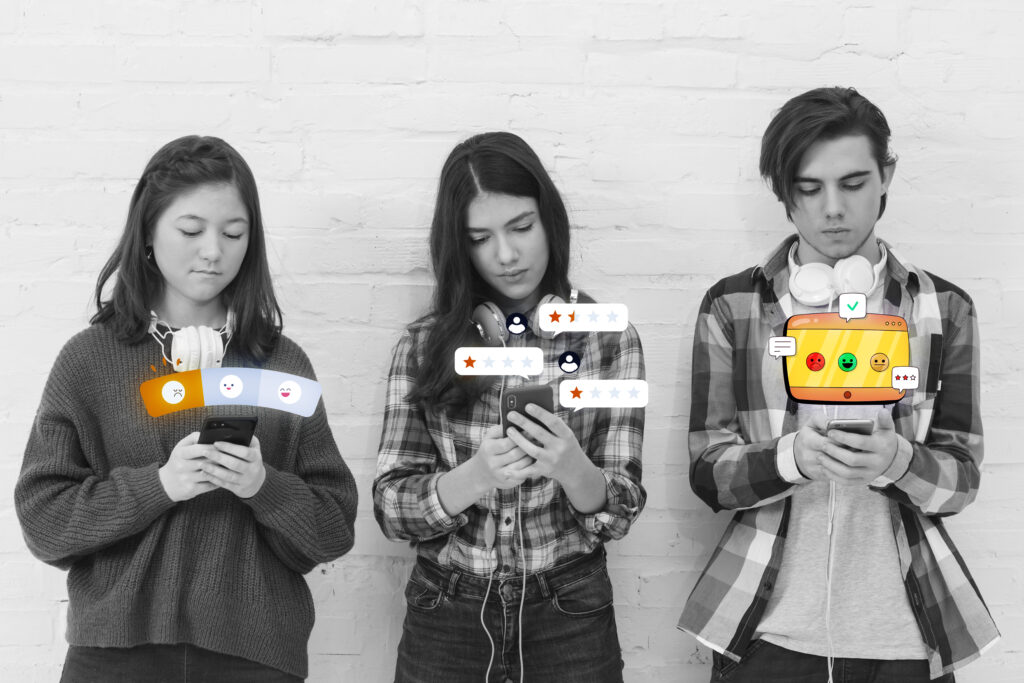
The strongest concern is not simply being online. It is when social media use becomes difficult to control or starts interfering with everyday life.
A 2024 meta-analysis involving more than 252,000 participants found a moderate association between problematic social networking use and several forms of anxiety, including generalized anxiety, social anxiety, and fear of missing out.
Fear Of Missing Out Keeps Your Brain Checking
You may know there is nothing important waiting on your phone, yet still feel compelled to check.
FOMO can sound like:
- “What if everyone is hanging out without me?”
- “What if I miss something important?”
- “Why haven’t they replied?”
- “Everyone seems to be doing something except me.”
This can turn checking into a loop: uncertainty → checking → brief relief → another urge to check.
This checking-relief loop is a version of the same pattern behind why anxiety is getting worse for many people, driven partly by overstimulation.
Over time, the phone becomes something you use to manage uncertainty rather than simply communicate.
Constant Notifications Keep You Mentally Alert
A message, like, mention, or notification can interrupt whatever you are doing.
Even when the interruption lasts only seconds, repeated switching between tasks can make it harder to stay mentally settled.
Try noticing whether you:
- Check your phone during conversations.
- Open an app whenever work becomes slightly difficult.
- Reach for your phone without consciously deciding to.
- Feel uncomfortable when there are no new notifications.
That constant checking can become particularly disruptive when it follows you into bedtime.
How Social Media Interferes With Your Sleep
Social media can affect sleep through more than just the time spent scrolling. Night-time use can delay bedtime, increase mental stimulation, and make it harder to disengage.
A 2024 systematic review and meta-analysis found associations between problematic social media use, sleep problems, anxiety, depression, and lower wellbeing among young people.
Bedtime Scrolling Can Push Sleep Later
You may intend to watch one short video before sleeping and suddenly realize 45 minutes have passed.
The combination of endless content and personalized recommendations makes stopping difficult.
A simple experiment is to:
- Keep your phone away from your bed.
- Set a realistic time to stop scrolling.
- Use an alarm or timer as a stopping cue.
- Replace late-night scrolling with something less stimulating.
Better sleep can then make it easier to manage your mood, concentration, and stress the following day.
And sleep is not the only everyday function that social media can quietly disrupt.
How It Affects Your Attention And Productivity
Social media provides rapid stimulation. You can move from a funny video to a message to a news story within seconds.
Real-life tasks usually do not provide that same level of novelty.
Frequent Switching Can Make Boring Tasks Harder
Imagine trying to study for an exam while checking Instagram every ten minutes.
Each check may feel harmless. But repeatedly switching between studying and scrolling makes it harder to stay immersed in the task.
Instead, try:
- Putting your phone in another room during focused work.
- Turning off non-essential notifications.
- Using specific breaks for social media rather than checking continuously.
- Starting with a 20–30 minute period of uninterrupted work.
The goal is not to eliminate entertainment. It is to stop social media from deciding when your attention moves.
This becomes even more important when social media starts replacing real-world connection.

When Online Connection Starts Replacing Real Connection
Social media can strengthen relationships, especially when distance makes regular contact difficult. It can help people find communities they may not have offline.
The concern arises when online interaction consistently replaces meaningful offline connection.
Passive Scrolling Can Feel Social Without Connection
Watching hundreds of people’s updates can create the feeling that you have been socially active when you have barely interacted with anyone.
For example, you might spend an hour watching Stories but never message the friend you actually wanted to talk to.
Consider asking yourself:
Check-in question | What it can reveal |
| Did I interact or simply consume? | Whether scrolling is replacing connection |
| Do I feel closer to people afterward? | Whether the activity is emotionally satisfying |
| Am I avoiding someone offline? | Whether social media is becoming an escape |
| Do I feel better or lonelier afterward? | Whether your current use is helping |
Social media can therefore be both a source of connection and a substitute for it. The difference often depends on how you are using it.
How To Build A Healthier Social Media Routine
You do not necessarily need to delete every app or disappear from the internet. A healthier approach is to make your use more intentional.
Notice Which Apps Change Your Mood
For one week, pay attention to what happens before and after using different platforms.
You could quickly record:
- What you were feeling before opening the app.
- What you looked at.
- How long you stayed.
- How you felt afterward.
You may discover that one platform leaves you energized while another consistently makes you anxious or inadequate.
That information gives you something more useful than a generic “screen-time limit”: a personalized understanding of your own digital habits.
Change Your Feed Instead Of Blaming Yourself
Your feed is not fixed. You can actively shape what repeatedly reaches you.
Try to:
- Unfollow accounts that trigger constant comparison.
- Mute content without needing to unfollow someone.
- Mark unwanted recommendations as irrelevant.
- Follow accounts that educate, entertain, or genuinely inspire you.
- Leave conversations that repeatedly increase conflict or distress.
Reducing harmful content can be more useful than simply watching the clock and worrying about how many minutes you have spent online.
Create Phone-Free Moments That Actually Matter
Instead of trying to stay off your phone all day, choose specific parts of your routine that remain screen-free.
For example:
- Keep meals phone-free.
- Leave your phone outside the bedroom.
- Avoid scrolling during conversations.
- Take a walk without checking notifications.
- Give yourself the first 20 minutes of the morning offline.
These boundaries create space for activities that social media can easily crowd out.
And if your relationship with social media is already affecting your mood or functioning, it may be worth looking beyond digital habits alone.
When Your Habits Need You To Turn To Professional Support
Social media use becomes more concerning when it is part of a broader pattern of emotional distress rather than simply a habit you dislike.
Consider speaking with a mental health professional if you notice:
- Persistent anxiety or low mood.
- Significant sleep disruption.
- Increasing isolation from people offline.
- Strong distress around appearance or social comparison.
- Difficulty controlling your social media use despite wanting to reduce it.
- Social media interfering with school, work, relationships, or daily responsibilities.
- Feeling significantly worse after repeatedly consuming certain types of content.
Social media may be contributing to the problem, but it may also be a way of coping with something that was already difficult.
Understanding that distinction can help you address the underlying issue rather than focusing only on your phone.
How Weiss Wellness Can Help With Digital-Life Stress
At Weiss Wellness, therapy can help adolescents, young adults, and adults explore how social media fits into broader concerns such as anxiety, depression, self-esteem, relationships, and life transitions.
Depending on your needs, treatment may include:
- CBT: Identifying thought patterns around comparison, rejection, appearance, or online feedback and examining how they affect behavior.
- DBT skills: Building emotional-regulation and distress-tolerance skills when online interactions trigger intense reactions.
- Mindfulness: Learning to notice urges to check, compare, or scroll without automatically acting on them.
- Family support: Helping parents and families navigate issues such as adolescent social media use and communication.
Weiss Wellness offers in-person and virtual therapy and provides a free 15-minute consultation to discuss whether the practice is a suitable fit.
The goal is not necessarily to give up social media. It is to help you build a relationship with it that supports rather than disrupts your wellbeing.
Final Thoughts:
Social media is not inherently good or bad for your mental health. Its impact depends on what you consume, how you engage, what it replaces, and how you feel afterward. For some people, it provides connection and community. For others, problematic use can contribute to comparison, anxiety, sleep disruption, or lower wellbeing.
Instead of asking, “How much social media is too much?” ask, “What is my social media use doing to me?” If you regularly feel worse after scrolling or find it difficult to step away, that pattern deserves attention. Small changes to your feed, boundaries, and routines can help. If social media concerns are tied to deeper emotional struggles, Weiss Wellness can help you explore what is underneath them. Learn more about anxiety therapy in New Jersey and depression therapy in New Jersey to see how Weiss Wellness can help.
Frequently Asked Questions
No. People respond differently based on age, personality, existing mental health, social environment, content exposure, and how they use platforms. Research also shows substantial variation between studies, so individual patterns matter more than blanket conclusions.
Not necessarily, but passive consumption can create different experiences from active interaction. Research suggests that whether someone uses social media actively or passively may influence its relationship with wellbeing. The content and emotional context also matter.
Yes. Time alone does not capture the full picture. A shorter period spent consuming highly distressing content, comparing yourself with others, or checking repeatedly may affect you differently from longer periods spent having meaningful conversations.
Social platforms provide constantly changing content and unpredictable rewards, such as messages, likes, and new posts. That combination can encourage repeated checking. For some people, checking also becomes a way of managing boredom, loneliness, or uncertainty.
Yes. Social media can provide emotional connection, peer communities, information, and opportunities to find people with shared experiences. Its benefits can be particularly meaningful when someone has limited offline support or feels isolated from others with similar interests.
Not automatically. Reducing use may help some people, but deleting an account does not address underlying anxiety, depression, loneliness, or self-esteem concerns. The usefulness of a break depends on what the person is experiencing and how they use it.
Looking at another person’s profile can trigger comparison, uncertainty, or interpretation of social cues. If you are already worried about friendships, relationships, or how others perceive you, seemingly small online details may become much more emotionally significant.
Look beyond screen time. Pay attention to changes in sleep, mood, school functioning, relationships, eating patterns, offline activities, or emotional reactions connected to social media. A noticeable change in overall functioning is more informative than one usage number.